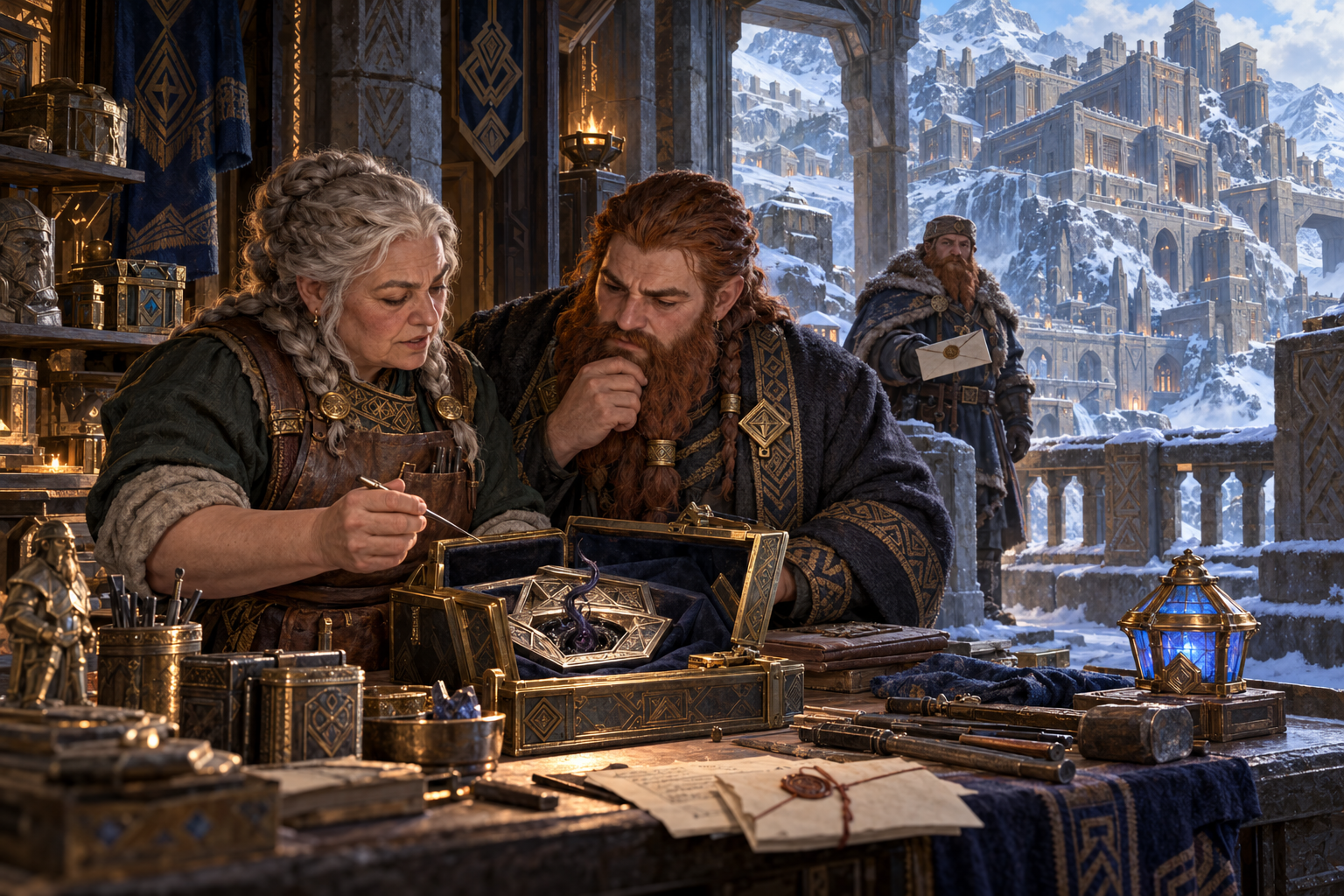
A dwarf restorer considers a carefully contained relic among objects carrying generations of memory.
The Mror Holds, in the Ironroot Mountains, are a major homeland of dwarven culture. Mror clan histories connect kinship, land, work, and obligations across generations. Wealth can be displayed through fine craftsmanship and the achievements of a family, while an heir’s reputation rests partly on what they add to that inheritance. Dwarven communities elsewhere have developed their own attachments; a Sharn-born dwarf can belong to the city far more closely than to a distant Hold.
The Holds and their past
During the Last War era, Mror expeditions reached ancient halls beneath the mountains. Relics and the discovery of hostile aberrations turned a story about ancestral inheritance into a struggle over the Realm Below. Clans disagreed over whether living symbiotic tools recovered from the depths were useful discoveries or corrupting dangers. This is part of the Holds’ history, with its own regional disputes and unfinished questions.
Dwarves in Sharn
 Art: Sam Keiser. Image source and credits, Eberron Wiki.

House Kundarak carries the Mark of Warding in dwarven lines. Its banks, vaults, and protective services give the House a visible place in the city, but clan membership, dwarven ancestry, and a Kundarak contract are separate relationships. A banker and a tenant disputing a standing charge may share ancestry while having little else in common.
By 1250, Sharn’s finance and certified services make Kundarak relevant to many households. Coin still passes between neighbors, while institutional accounts and authorized charges settle more slowly through clerks and records. Access to a bank is useful; the time and means to challenge an error are another matter.
Dwarven longevity also changes how history is carried. Some residents can place a family’s story of the Last War beside memories from their own youth. Others inherit the past through letters, objects, and people who chose what to preserve. Neither a clan name nor an old possession tells the whole story of a life in the city.
Background: The Dwarves.
Objects with a history
Among the Mror, a fine object matters partly because of what has happened to it. A battered tool used by a beloved relative can carry more standing than an expensive new purchase. Family stories follow gifts, weapons, clothing, and workshop pieces; generosity can display confidence as clearly as a full vault. A feast becomes an occasion to celebrate another person's achievements as well as one's own.
Those traditions travel well. A Sharn household can keep inherited tools, repair an old coat, or retell a family success without possessing a fortune. A clan's famous name does not guarantee that a particular descendant has money or influence.
Craft and adaptation
Mror family trades changed when House businesses entered their markets. Some families became suppliers or specialists within a larger enterprise; others preserved independent work. That history gives a dwarf good reasons to value both practical adaptation and control over a craft. An heirloom kept in working order can be a source of pride precisely because it has survived several changes of employer.
Additional cultural reference: Exploring Eberron, The Mror Holds, especially printed page 115.
Sources & adaptation
- Rising From The Last War: The Dwarves — Keith Baker — Mror culture and published Realm Below developments