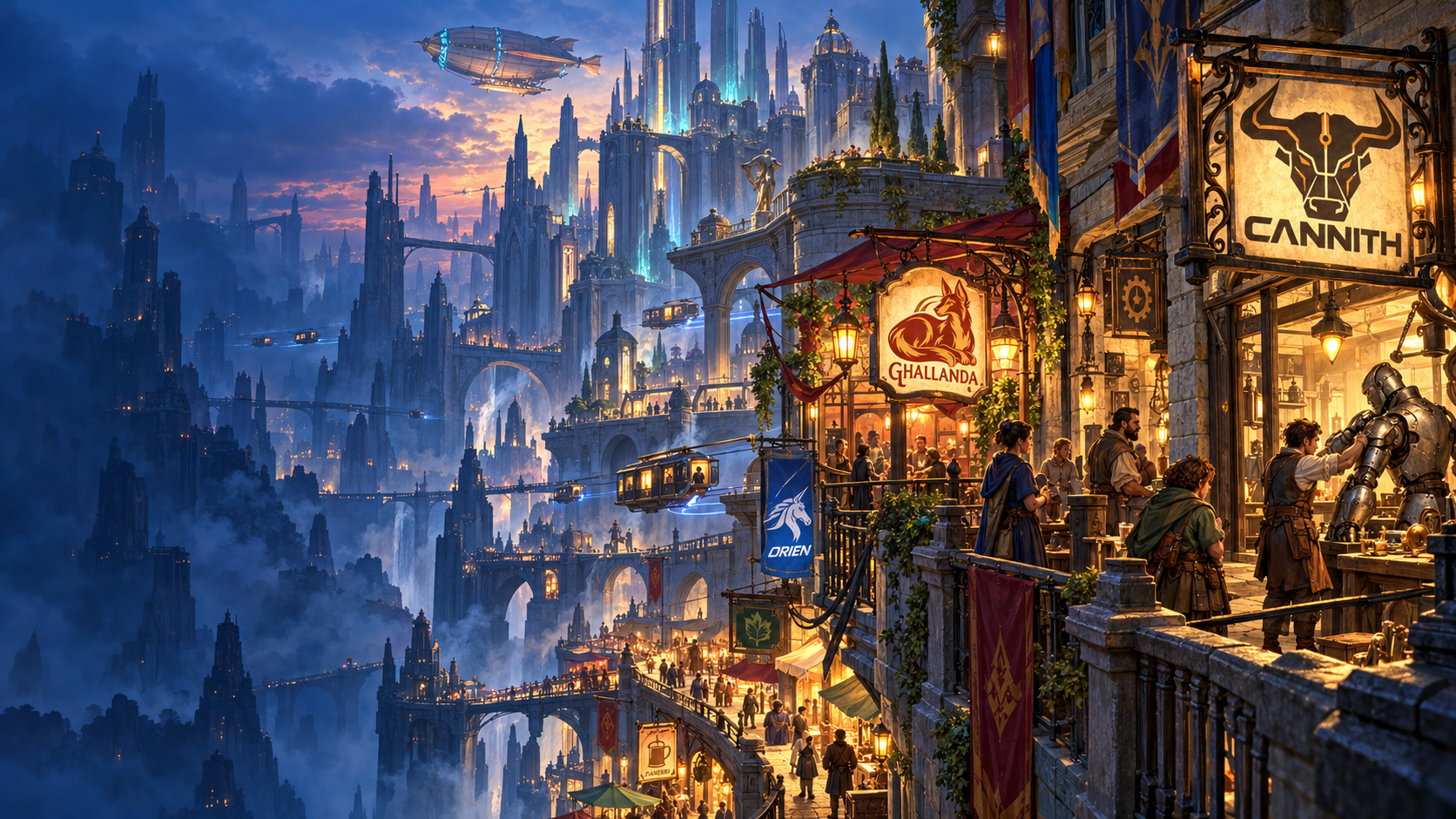
Every tower rests on someone
The year is 1250 YK. In Sharn, a streetlamp burns without oil, a lift carries workers through a tower, and a skycoach crosses a gap between towers. Someone built each one. Someone keeps it working. Someone sends the bill.
Sharn rises above southern Breland in bridges, platforms, towers, and crowded interior streets. Its extraordinary height is possible because of a manifest zone linked to the plane of Syrania. Height also shapes ordinary fortunes: private terraces and quick transport above, shared washrooms and delayed repairs below. The two worlds can occupy the same building.
A city living on contracts
The dragonmarked Houses began as family guilds whose inherited magical gifts supported particular trades. Their combines now reach through transport, banking, communication, healthcare, and the devices in people's homes. The Mana Standard, introduced around 1032 YK, gives participating services a shared way to recognize customers and authorize access.
The result is useful. One enrollment credential can open a transit gate and identify a customer at another House desk. It also means that work, housing, tools, and medical care can depend on several overlapping agreements. A missed message or frozen account can cost more than the service itself.
Breland still has a crown and parliament. Sharn still has an elected council and courts. A tenant can win a hearing; a worker can challenge an accusation. Money, time, and House influence help determine who reaches that protection before losing a home or a livelihood.
The past underfoot
The Last War ended centuries ago, leaving family stories, institutions, and a few living witnesses. The Mourning, which destroyed Cyre in 994 YK, remains the defining catastrophe. Its cause is unknown. The Treaty of Thronehold ended the war, recognized warforged freedom, and banned creation forges.
Today, posters for the Public Safety and Continuity Act hang in stations. Supporters promise safety; opponents warn of expanding House punishment powers. The vote is approaching.
Life between the notices
Sharn's neighborhoods contain more than failing services. Landing tables collect food, spare tools, and coats. Neighbors teach useful magic, accompany one another to court, repair what they can, and celebrate the Race of Eight Winds. A House employee may share dinner with an independent maker whose work their employer disapproves of.
Daily life, care and housing, and lives and loyalties describe these overlapping worlds: a city where small acts of help matter, and where the people doing the work have reasons to want something better.
Sources & adaptation
- Mana Standard Player Primer — PDF pages 2-7