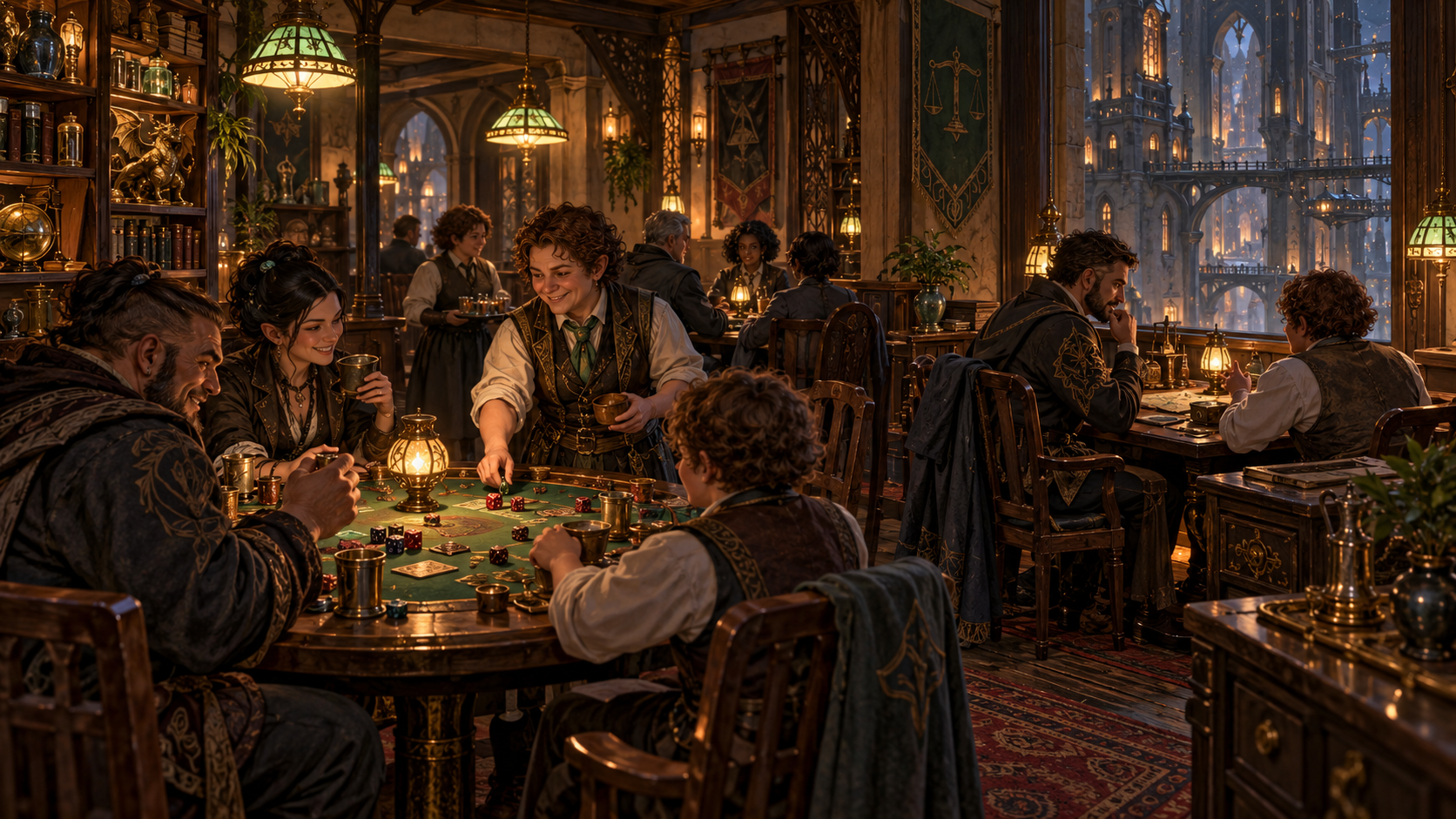
Gaming, hospitality, and quiet business share a room above a lower-ward restaurant.
The Boromar Clan is a longstanding Sharn crime family with halfling roots. Historical accounts associate it with gambling, smuggling, and influence: businesses that depend as much on regular customers, introductions, and silence as on direct force.
Family and business
The Clan's family identity is part of its reputation, but “Boromar” and “halfling” are not interchangeable. Sharn's halflings include people with many employers, faiths, and loyalties. Even relatives can stand at different distances from an organization's business.
A smuggling arrangement involves more than the person carrying a package. Someone finds buyers, someone handles storage, someone knows a route, and someone takes the risk when authorities ask questions. A legal venue can also provide introductions or a convenient place to talk. Such relationships make a criminal network part of a neighborhood's economy without making everyone nearby a participant.
Favors and pressure
 Art: Anne Stokes. Image source and credits, Eberron Wiki.

A useful contact may solve a problem that an official institution is too slow or expensive to address. The favor can also create an obligation. For a shopkeeper, the distinction between a willing arrangement and a demand backed by threats matters more than the polite language used to describe it.
The Boromar Clan and Daask are longstanding rival names in Sharn's criminal history. Accounts from around the end of the Last War describe conflict between them. That history explains the reputations attached to the names without identifying the person behind every present dispute.
Sharn's faction guide distinguishes organized crime from civic authority and neighborhood organizing.
Sources: Manifest Zone: Organized Crime.
Sources & adaptation
- Eberron: Rising from the Last War — Ch. 3: Boromar Clan
- Organized Crime — Manifest Zone — The Boromar Clan topic