
Two bearers of unfamiliar marks share a quiet meal above the busy lower streets.
House Tarkanan is a local organization associated with aberrant dragonmarks. Despite its name, it is not one of the recognized commercial dragonmarked Houses. Calling itself a House asserts an identity outside the families that dominate legitimate dragonmarked business.
Aberrant marks
The familiar House marks follow recognized family lines and support established services. Aberrant marks fall outside those patterns. They have attracted fear and persecution, and their bearers can face suspicion before anyone knows what a particular mark does.
An aberrant mark does not establish that its bearer belongs to Tarkanan. It is a bodily and magical fact about a person, not a membership badge. People bearing such marks can have different convictions, occupations, and feelings about the organization that has made the marks central to its identity.
Solidarity and a dangerous reputation
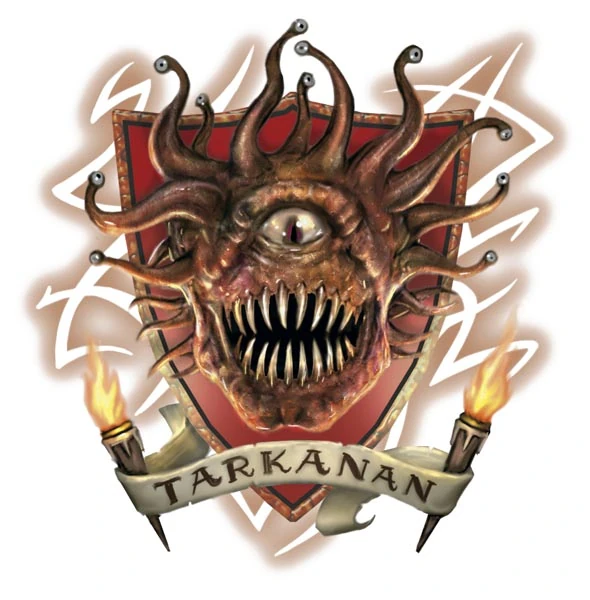 Art: Anne Stokes. Image source and credits, Eberron Wiki.

Accounts from around 998 YK describe Tarkanan as a small organization with mercenary and criminal associations, alongside solidarity among people persecuted for their marks. Those two parts of its reputation coexist: someone can hear of it as a source of protection and hear the same name attached to dangerous work.
In Mana Standard's Sharn, Tarkanan remains a distinct local force. It is not the commander of every tenant group, labor organization, independent caster, or person angry at the Houses. Shared opposition to an institution does not erase disagreements about methods, obligations, or acceptable costs.
Sharn's faction guide places Tarkanan within that wider landscape.
Sources: Wayfinder's Guide to Eberron, Sharn and Criminal Activities.
Sources & adaptation
- Eberron: Rising from the Last War — Ch. 3: House Tarkanan
- Mana Standard Player Primer — PDF pages 2-7, campaign-era additions
- Organized Crime — Manifest Zone — House Tarkanan topic