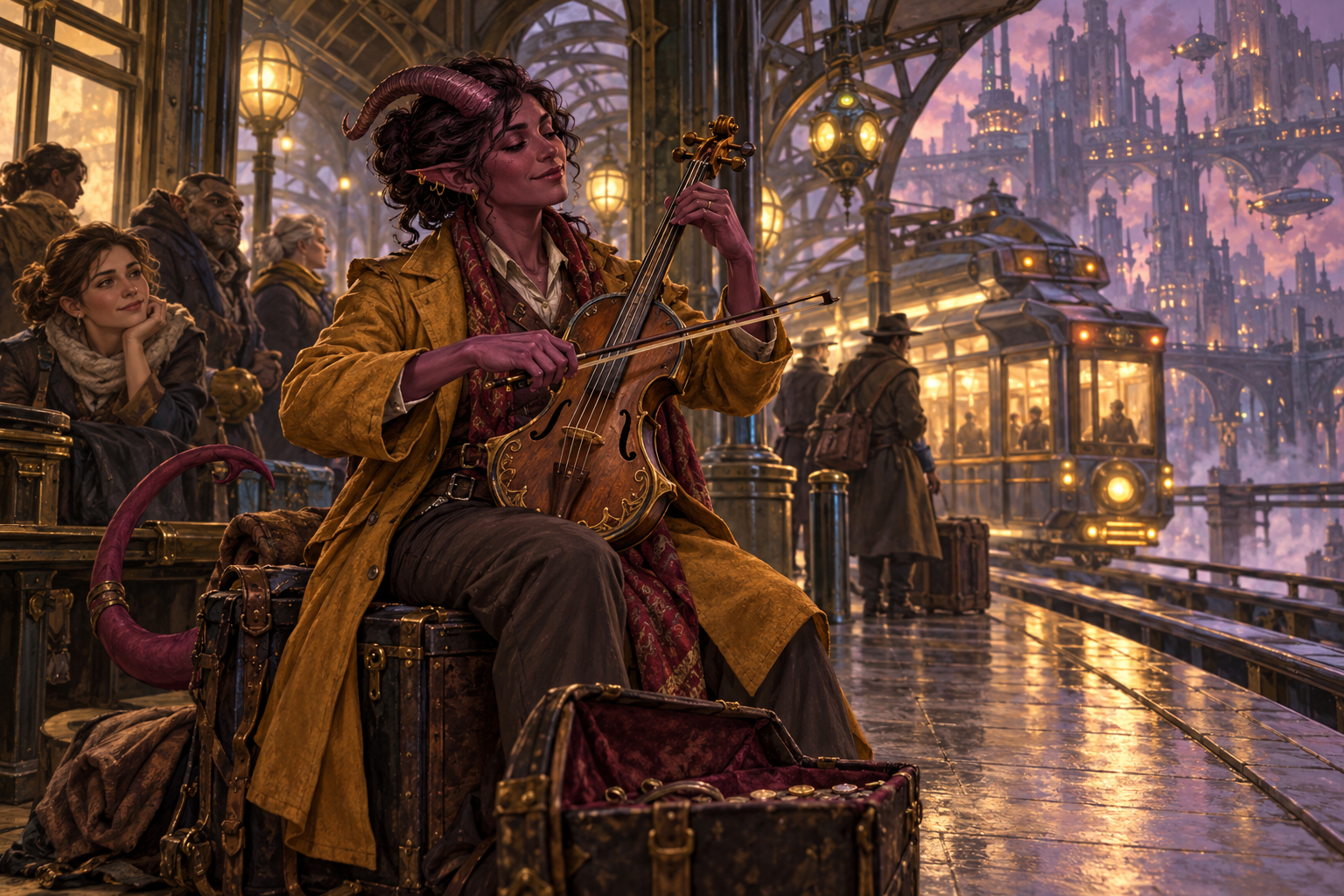
A tiefling musician plays for passengers at a covered Sharn station.
Tieflings are people whose bodies bear a supernatural inheritance often associated with fiendish power. Horns, unusual coloration, tails, or other features can make that inheritance visible. Appearance does not establish a person's actions, allegiance, or character.
Many origins
Eberron offers many routes by which otherworldly influence can enter a family or a life: ancient magic, a planar connection, an inherited transformation, or events a family no longer understands. There is no single origin story that every tiefling must share. A recognizable lineage can matter deeply to one household while being a mystery to another.
A tiefling's gifts do not create a universal obligation to a fiend. A supernatural ancestor or influence is a different question from the choices a living person makes. Eberron's faiths disagree about many such questions; a stranger's confident explanation need not be accurate.
Tieflings in Sharn
The city's cosmopolitan streets offer familiarity with unusual appearances, unevenly distributed across neighborhoods and institutions. A family can be known through years of ordinary work while an unfamiliar official treats its appearance as a warning.
A tiefling can serve a House, work independently, join a congregation, or organize against an employer. Shared experience of prejudice can bring people together without supplying a common political program. Their place among the peoples of Eberron rests on lived relationships as well as inheritance.
Reference: Eberron: Rising from the Last War, Tieflings, printed page 35.