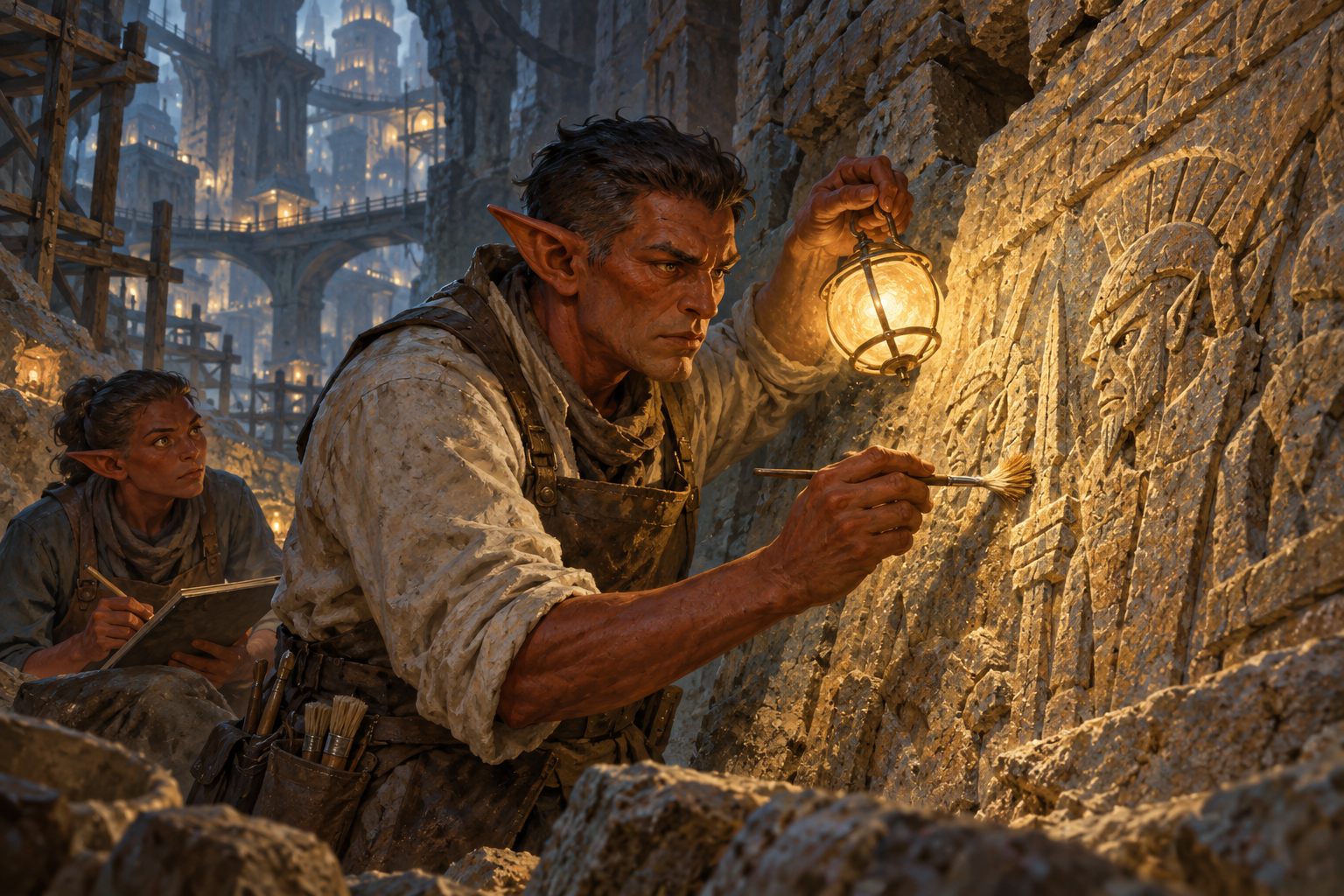
A hobgoblin conservator examines older stonework beneath the modern city.
Hobgoblins have a long history in Khorvaire, including prominent roles in the empire of Dhakaan. Their association with armies is one part of that inheritance. A modern hobgoblin may be a soldier, artisan, merchant, academic, or someone whose closest concerns are entirely local.
Inheritance and discipline
Dhakaani traditions call hobgoblins ghaal'dar. In that civilization, leadership and military discipline belonged to an ideal of service to the whole. Skilled craft, planning, and preservation of knowledge mattered alongside battle. Those traditions are cultural practices, not commands written into every hobgoblin's mind.
The modern peoples of Darguun have their own histories and institutions. Being Darguul is a national association; being Dhakaani describes a particular cultural inheritance. Neither follows automatically from being a hobgoblin. The goblinoids overview follows that distinction through the continent's older history.
Hobgoblins in Sharn
A veteran can bring habits of organization to a workshop, mutual-aid effort, or security job. Another hobgoblin may have no military upbringing. Citizenship, family history, religion, and workplace loyalty can pull in different directions.
Old stonework can connect a family to a past the modern city's institutions barely acknowledge. It can also provoke arguments over who may interpret that past. Ancestry alone does not make someone a representative of Dhakaan or a spokesman for their goblin and bugbear neighbors.
References: Eberron: Rising from the Last War, Goblinoids, printed pages 24–26; Exploring Eberron, The Heirs of Dhakaan, printed pages 99–100.