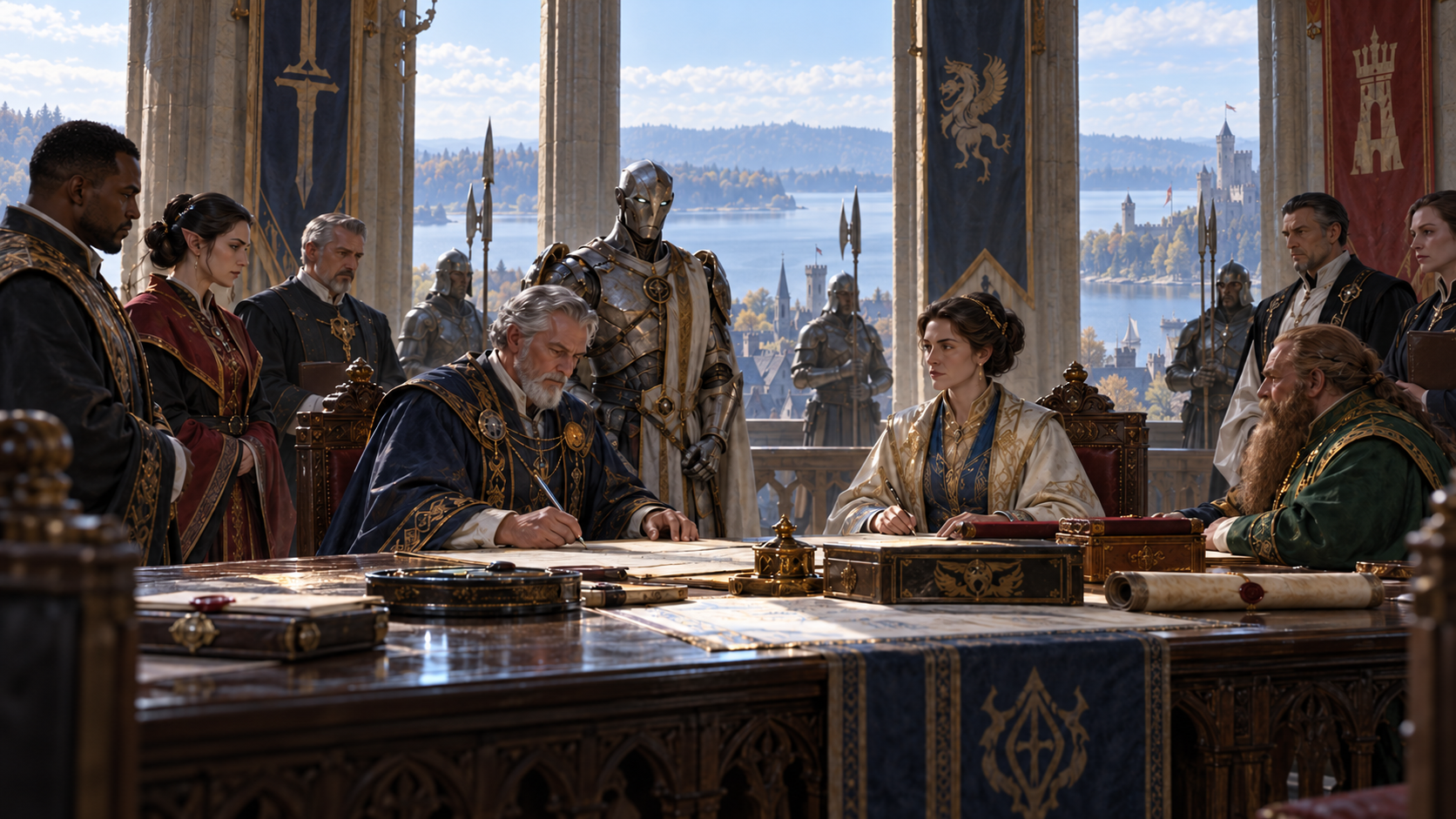
An imagined scene of the treaty negotiations at Thronehold in 996 YK.
The Treaty of Thronehold, signed in 996 YK, formally ended the Last War and recognized a new political order. After a century of fighting and the destruction of Cyre, it established peace while leaving many wartime grievances unresolved.
Border disputes, espionage, prejudice, and fear of another Mourning survived the negotiations. Recognition on paper gave nations and people a framework for the aftermath; making a life within it remained a separate task.
Warforged freedom
The treaty recognized warforged as free people and required House Cannith's creation forges to be shut down. Being built for the war no longer established a lawful claim of ownership over a person.
Freedom left the practical needs of a home, livelihood, and fair treatment to be met. Those problems remain visible in 1250, when some employers and officials still treat warforged bodies as industrial assets despite their legal personhood.
The public category of Steward construct labor is separate. Warforged encountered in workshops, streets, and House offices have their own lives and jobs, with the legal standing of free people.
A treaty still present
 Art: Kyle Hunter. Image source and credits, Eberron Wiki. Historical map.

For most Sharn residents, Thronehold belongs to history learned through stories, institutions, and law. An old warforged veteran or another long-lived resident may remember the transition directly.
Sharn's institutions and current law describe the government that now works alongside powerful House providers.
Sources & adaptation
- Eberron: Rising from the Last War — Introduction and Ch. 1: Warforged
- Manifest Zone: The Last War — Keith Baker — The postwar situation